About MSPARC Workshop
The workshop convenes signal processing experts, cognitive neuroscientists, and HCI researchers to explore how multimodal signals can be measured and predicted, how modalities interact in shaping attention, and how targeted interventions might optimize cognitive resource distribution.
Examples of Topics
Cognitive Modeling
Advanced algorithms for detecting attentional states and predicting cognitive load from multimodal physiological signals.
Eye-Tracking Integration
Innovative use of eye-tracking "in the wild" to support acoustic processing and reveal cognitive states in real-time.
Adaptive Systems
Building intelligent systems that respond dynamically to users' cognitive capacity and attention allocation patterns.
Clinical Applications
Translating attention monitoring technologies for ADHD assessment, cognitive rehabilitation, and mental health support.
Workshop Schedule
May 4, 2026 - Full Day Program
Morning Schedule Overview
(Morning)
Welcome
Matthew H. Davis
Presentation
Present
(Morning)
Diako Mardanbegi
Present
Discussion
Afternoon Schedule Overview
(Afternoon)
Pawel Kasprowski
Presentations
Presentation
(Afternoon)
Position Paper
Detailed Schedule
| Time | Session | Details |
|---|---|---|
| 9:00 - 9:15 | Opening & Welcome | Workshop introduction and objectives - The theme, - The needs, - Intended outcomes, & - Ways to contribute. |
| 9:15 - 10:00 | Keynote 1 | Matthew H. Davis (MRC Cognition and Brain Sciences Unit, University of Cambridge) "Multimodal measures of speech understanding in typical and impaired individuals" |
| 10:00 - 10:15 | Organizer Presentation | Sofie Beier & Per Bækgaard — Research directions and the Reading the Reader project |
| 10:15 - 10:30 | Oral Paper Presentation 1 | 1 paper × 15 minutes (12 min presentation + 3 min Q&A): WS-P6.4: 'Incremental Feature Analysis for Reading Pattern Detection: A Systematic Evaluation of Behavioral Indicators in L2 Eye-Tracking' |
| 10:30 - 11:00 | Coffee Break | Networking and demonstrations |
| 11:00 - 11:45 | Keynote 2 | Diako Mardanbegi (AUB & Google) "The Quantified Mind: AI, Attention, and the Fusion of Continuous Biosignals" |
| 11:45 - 12:00 | Oral Paper Presentation 2 | 1 paper × 15 minutes (12 min presentation + 3 min Q&A): WS-P6.3: 'Quantitative Nystagmus Diagnosis Through Portable Eye Tracking and Computer Vision Analysis' |
| 12:00 - 12:30 | Interactive Discussion | Position paper brainstorming — collaborative idea generation |
| 12:30 - 14:30 | Lunch Break | Lunch and informal discussions |
| 14:30 - 15:15 | Keynote 3 | Pawel Kasprowski (Silesian University of Technology) "Chaos Detection in Biological Signals" |
| 15:15 - 15:45 | Oral Paper Presentations 3 | 2 papers × 15 minutes (12 min presentation + 3 min Q&A): WS-P6.1: 'An Explainable Attention-Based LSTM Fusion Network for Cognitive Load Prediction from Multimodal Physiological Signals' WS-P6.2: 'A Dynamic Numerical Model for Real-Time Estimation of Latent Cognitive States Using Oculomotor Metrics' |
| 15:45 - 16:00 | Sponsor Presentation | Sponsor presentation and technology demonstrations |
| 16:00 - 16:30 | Coffee Break | Networking and sponsor/poster viewing |
| 16:30 - 17:00 | Panel Discussion | Industry and academic experts discuss future of attention-aware computing |
| 17:00 - 17:30 | Conclusion of Position Paper | Finalizing the collaborative position paper drafted throughout the workshop |
| 17:30 - 18:00 | Closing | Summary of outcomes, future directions, and closing remarks |
Key Topics
Multimodal Signatures of Attention
Signal processing techniques for identifying attention distribution across modalities, including neural oscillations, eye movements, speech prosody, and behavioral markers.
Real-Time Cognitive Monitoring
Algorithms for continuous assessment of cognitive resources, including low-latency processing, adaptive filtering, and personalized baselines for individual differences.
Attention-Aware Applications
Innovative systems including hearing aids with EEG/eye-tracking, adaptive AR/VR interfaces, and educational platforms optimized for sustained attention.
Attention Modulation & Enhancement
Interventions for optimizing cognitive resources through neurofeedback, optimal timing of information delivery, and closed-loop attention management systems.
Clinical & Educational Applications
Tools for ADHD assessment, attention-aware learning systems, cognitive load balancing in high-stakes professions, and workplace burnout prevention.
Ethical Considerations
Guidelines for cognitive enhancement technologies, privacy in attention monitoring, and responsible development of attention-modulating systems.
Keynote Speakers
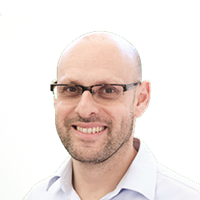
Matthew H. Davis
MRC Unit, University of Cambridge
Adaptive proc. of spoken language
"Multimodal measures of speech"
Read More →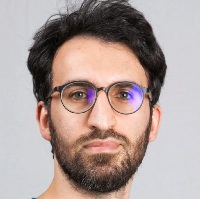
Diako Mardanbegi
AUB & Google Research
Eye-tracking and LLM Integration
"The Quantified Mind"
Read More →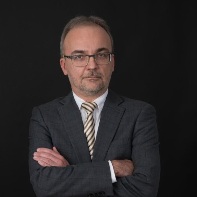
Pawel Kasprowski
Silesian University of Technology
Biomedical Signal Processing
"Chaos Detection in Biological Signals"
Read More →Workshop Organizers
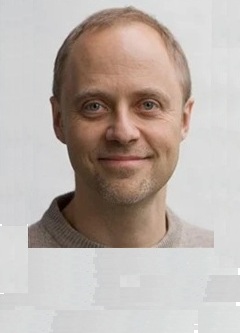
Per Bækgaard
Associate Professor
DTU Compute, Technical University of Denmark
Human-Centered AI, Eye Tracking, Cognitive Neuroscience
Website →
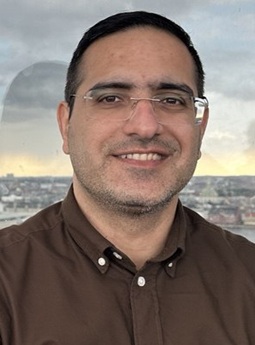
Ashkan Tashk
Postdoc Researcher
DTU Compute, Technical University of Denmark
Machine Learning, Biomedical Signal Processing
Website →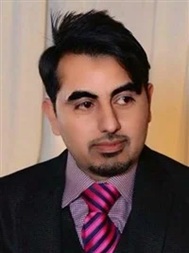
C.M. Aqdus Ilyas
Postdoc Researcher
DTU & Cambridge Digital Humanities
Computer Vision, Human-Robot Interaction
Website →
The workgroup would like to thank the Novo Nordisk Foundation that funded research project "Reading the Reader" through a “Data Science Collaborative Research Programme 2022” grant with agreement No NNF22OC0076877.
Call for Papers
Important Dates
- 🔍 Review Recruitment Deadline:
October 15, 2025 - 📝 Paper Submission Deadline:
October 22, 2025 - 📧 Notification of Acceptance:
December 16, 2025 - 📄 Camera-Ready Deadline:
January 7, 2026 - 💵 Registration deadline for Accepted Papers:
February 20, 2026 - 📅 Workshop Date: May 4, 2026
Submission Guidelines
We invite original research papers addressing topics related to MSPARC. Papers should follow the ICASSP 2026 format and will be published in IEEE Xplore. Submissions should be a maximum of 4 pages + 1 page for references. Please follow the templates provided in the Paper Kit. Do not use the templates from ICASSP 2025. The CFP flyer can be downloaded here.
Your support will be invaluable in helping us make this workshop a success!
Our Sponsors
We gratefully acknowledge the support of our sponsors who make this workshop possible.